Buddy - Home automation app
Making home life easier with an app that adapts to how people actually live.
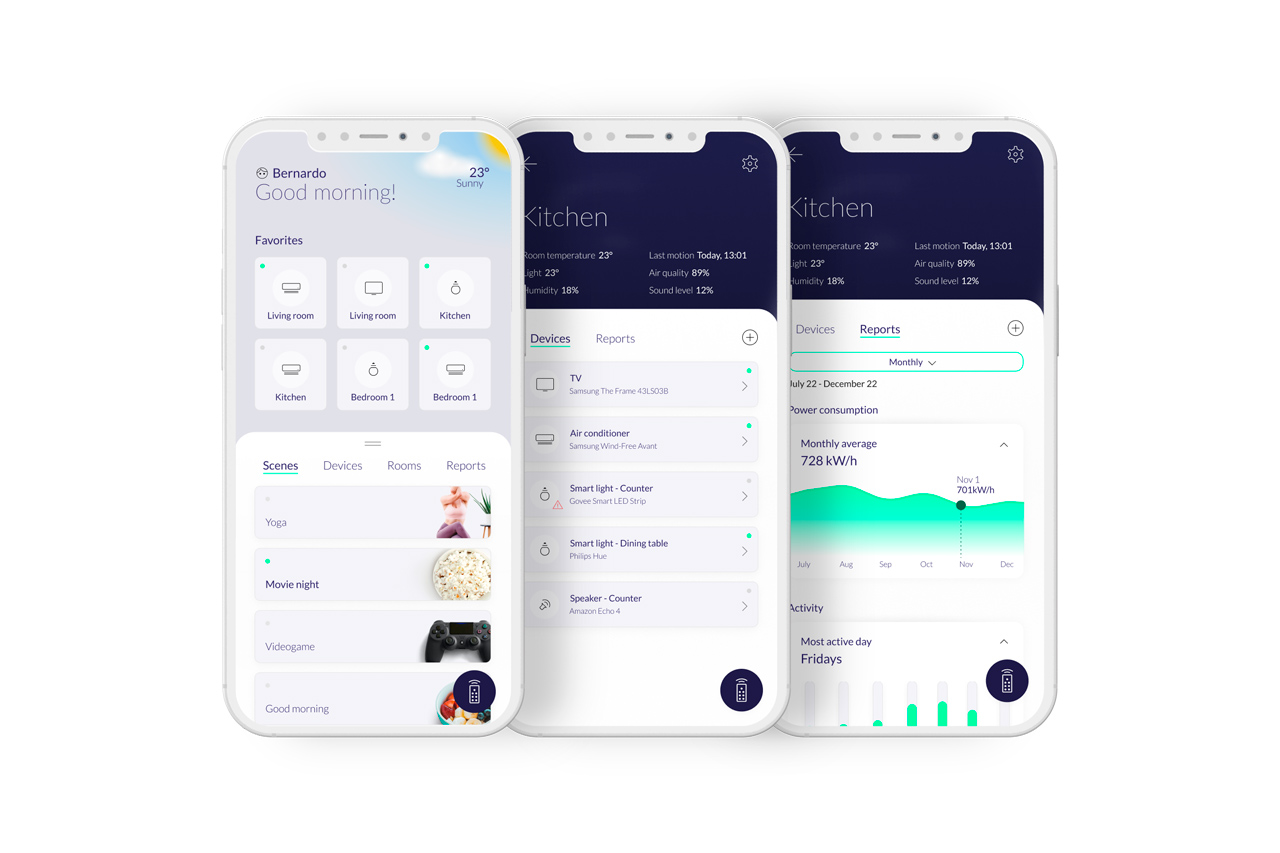
In this challenge, I was responsible for improving and rethinking the user experience of smart home management.
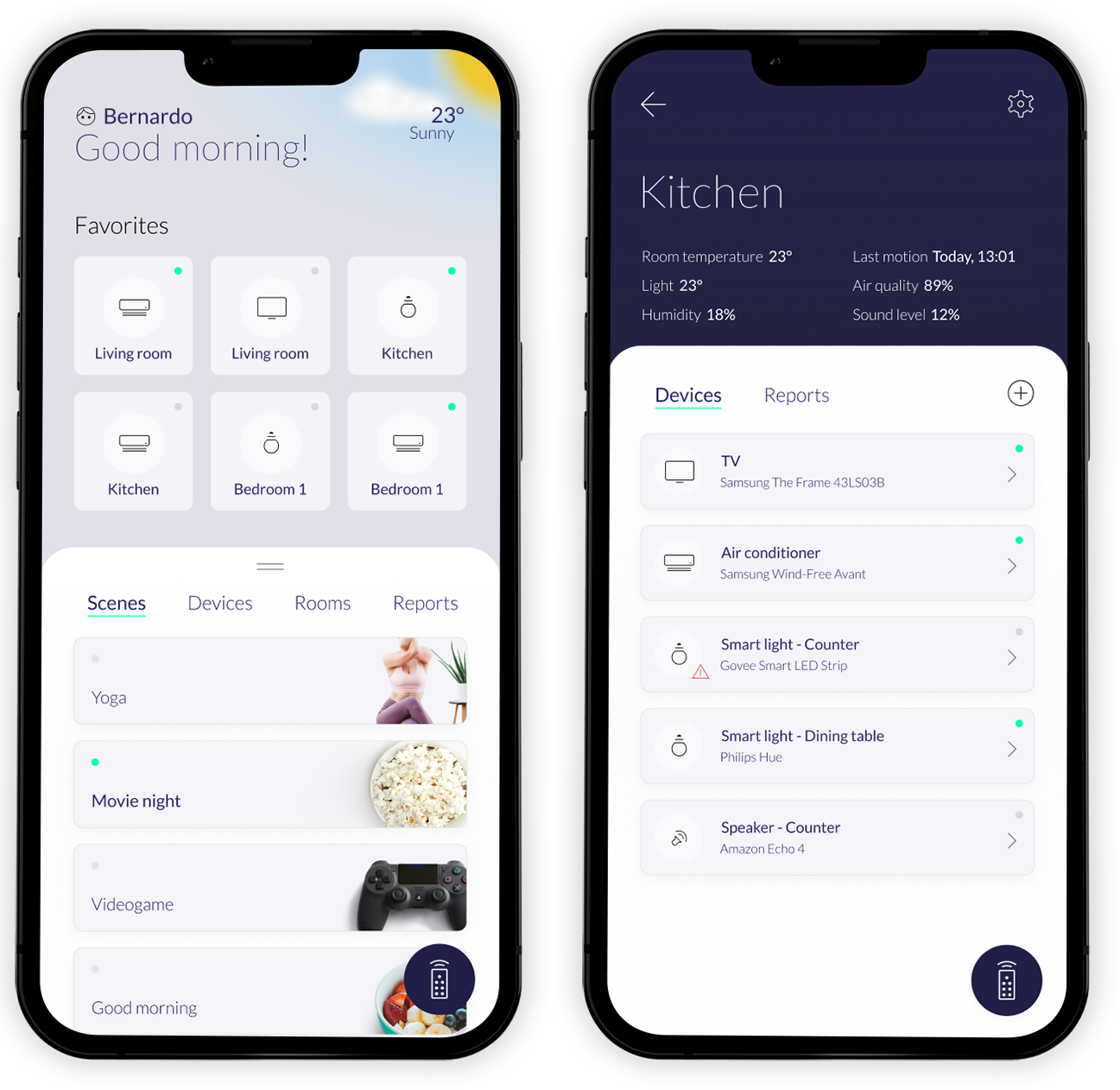
Home automation has taken off in recent years for the control, convenience, and security it offers. But a lot of the apps are hard to navigate and lack a cohesive design. Our research showed people struggle to manage multiple smart devices, and that these systems rarely adapt to how someone actually lives, so features go unused and users get frustrated.
Buddy Automation tackles those pain points by simplifying the whole experience: a clean, intuitive interface, device integration that just works, and plenty of room to customize.
The focus is on the mood people want in a given space, rather than controlling individual devices.
The main philosophy that drives the app is the concept of environments, trying to make the underlying tech and the devices invisible as much as possible.
The process included a typical design process and its 4 stages:
01
Everyone had the same frustration: too many apps, no real customization.
In discovery, we used surveys, interviews, and contextual inquiries to find user needs and pain points. People kept raising the same frustrations: juggling multiple apps and devices, and no real customization. They wanted a simpler, more personal experience that fit their routines.
We carefully analyzed user feedback to draft "How Might We" (HMW) statements, which helped us identify opportunities for improvement and innovation.
One HMW statement addressed the issue of managing multiple devices: "How might we create a unified platform that simplifies control of various smart devices?" Another focused on what would later drive personalization and the concept of scenes: "How might we help people feel more comfortable in their own homes?"
With that research in hand, we could pin down the areas that mattered most and design around them.
02
A stack rank decided what the first release would carry.
Based on our research findings, we brainstormed ideas to create a more user-friendly and customizable home automation app. We prioritized features and functionalities that aligned with users' needs and expectations.
Using the stack-rank method, we ranked the proposed features and functionalities based on their importance to the target users, feasibility, and potential impact on the overall user experience. Then placed the items in a prioritization matrix to see what should be prioritized in the first releases.
03
Refined round after round with beta users.
I developed wireframes and mockups for the app, focusing on a clean, intuitive interface that would provide users with quick access to essential features and information.
With the help of beta users, I conducted multiple rounds of usability testing to identify potential issues and areas of improvement. I gathered feedback and iterated on the designs accordingly.
Based on the feedback received during testing, I refined the design and functionality of the app to ensure an optimal user experience.
04
A case for user-centered home automation.
Buddy Automation is a case for user-centered design in a category that badly needs it. By keeping the app shaped by real user feedback, it aims to be a better standard for home automation.