Dalí
How we helped a luxury travel agency provide travellers the best experience for their trips.
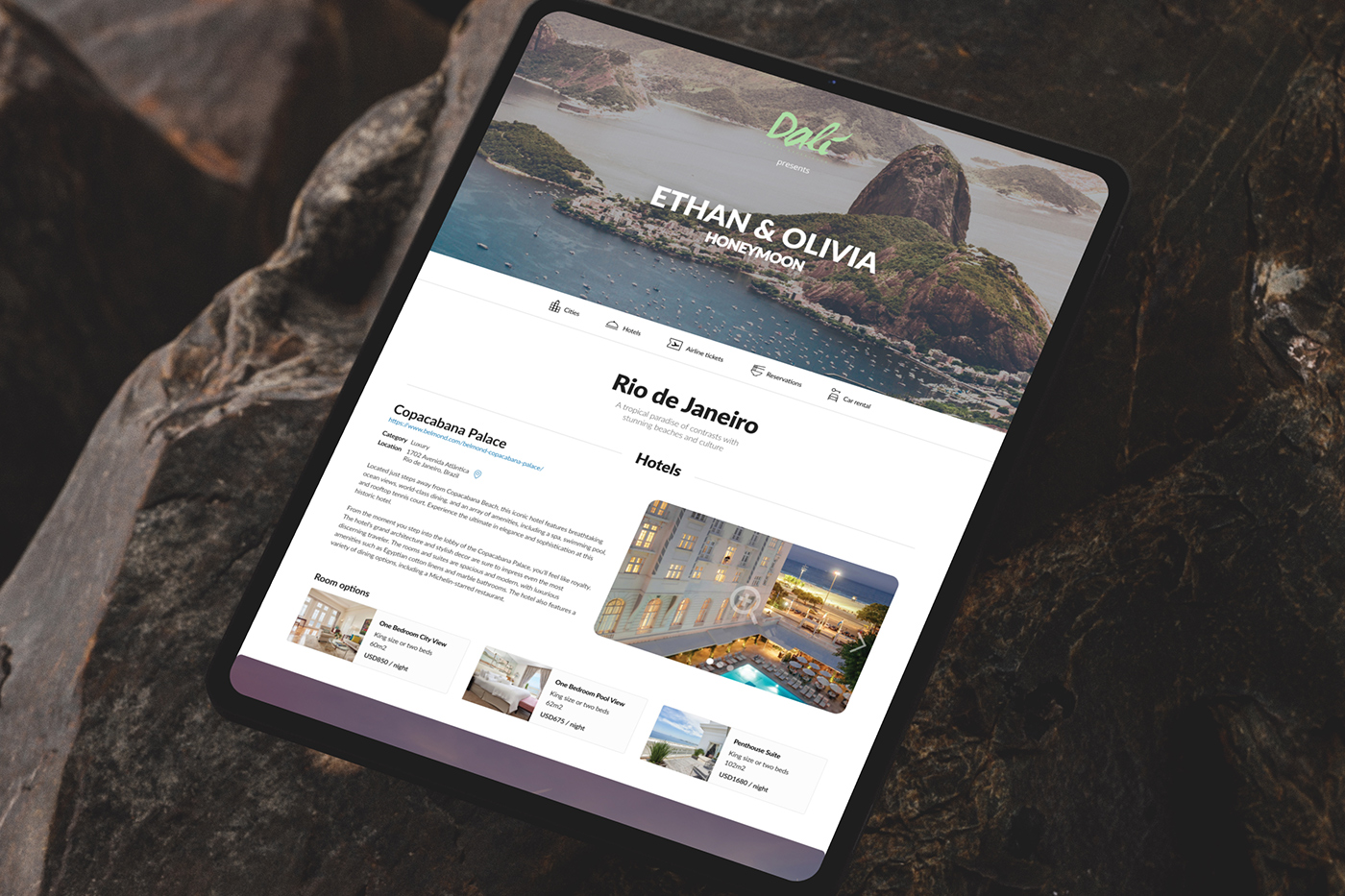
A personalized micro-site for each client, for each trip, with everything they need to view and adjust their journey before, during, and after.
01The challenge
Planning a dream trip meant too many trips to the agency.
When booking a trip, many people will go to a travel agency in person. With the assistance of an agent, they will build the trip of their dreams.
That also puts a burden on travel agents, who have to work hard and dedicate a lot of time to meeting and talking with potential clients, and only a percentage of them close the deal.
Behind the scenes, every proposal was built by hand. City write-ups, hotel descriptions, and photos lived in separate documents and spreadsheets; flight fares had to be requested and copied in one by one; and everything was assembled into a static PDF. Putting a single proposal together could take an agent a couple of days, and every change request meant redoing part of that work, and often another visit to the agency.
Since Dali Travel offers luxury experience travels, they wanted to offer a better service for their clients, so they looked for me to help.
It usually meant the traveler had to visit the agency many times, to view the proposal, adjust the itinerary, and pay.
02The solution
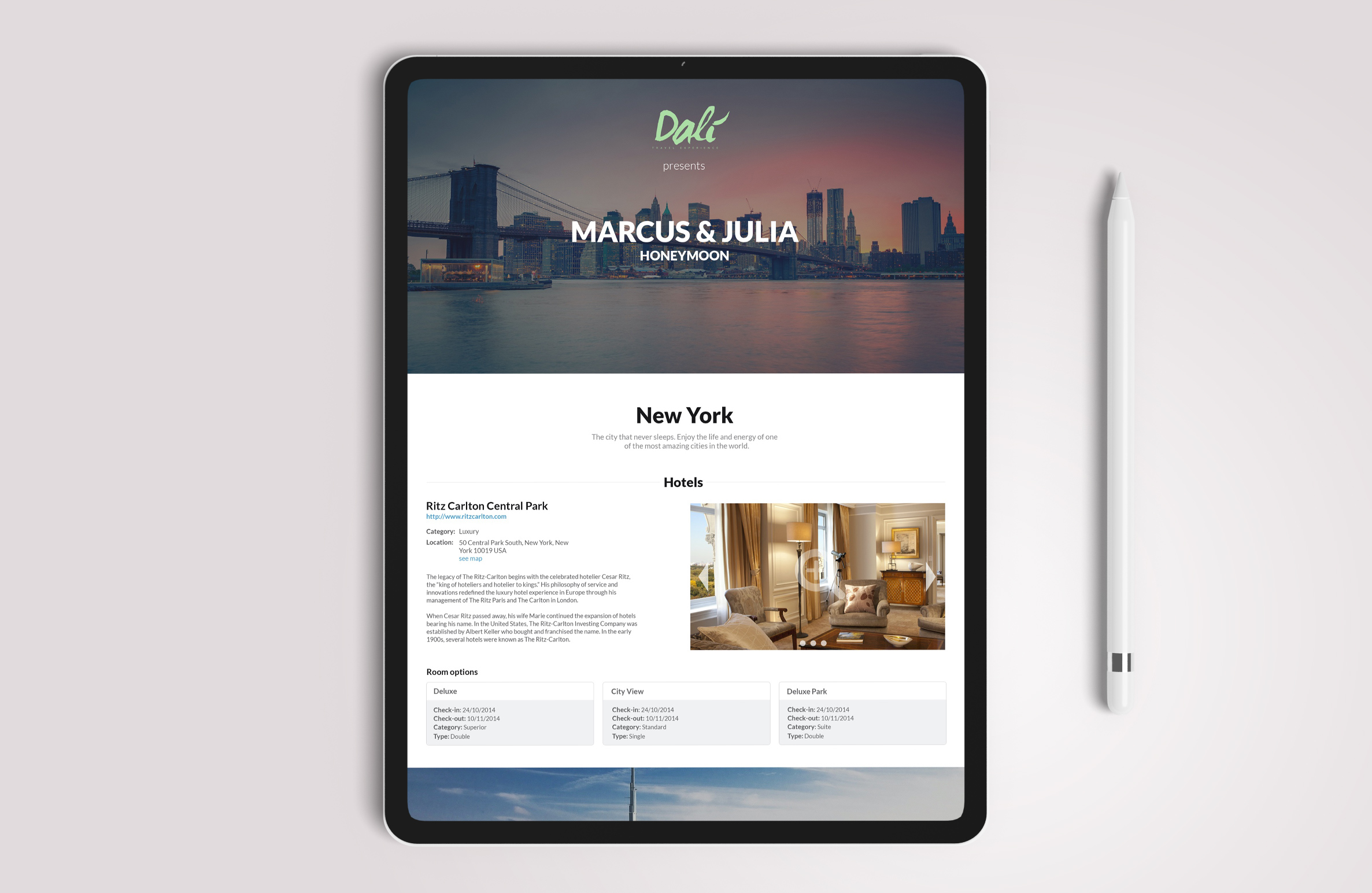
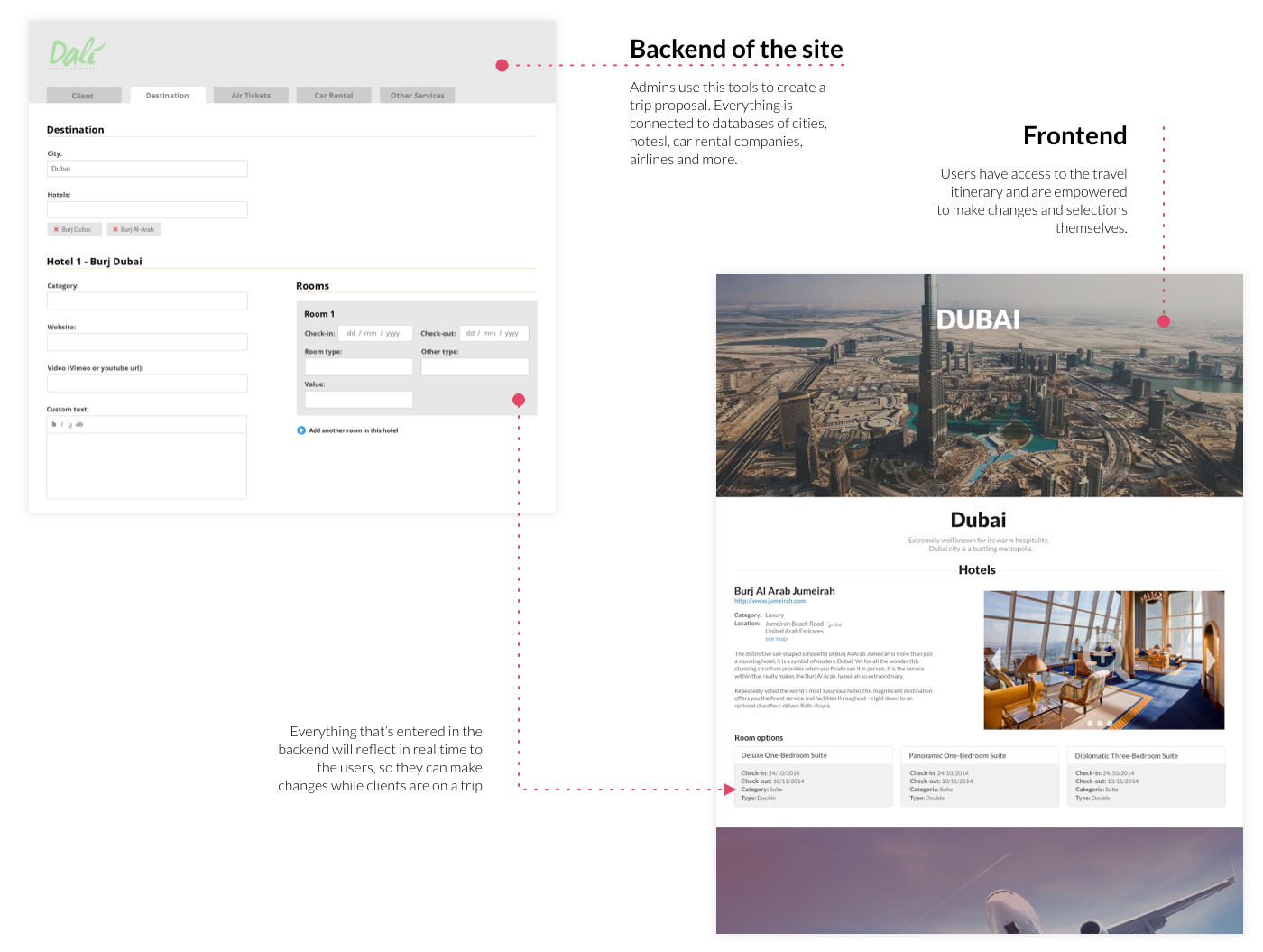
We created a personalized micro-site for each client, for each trip.
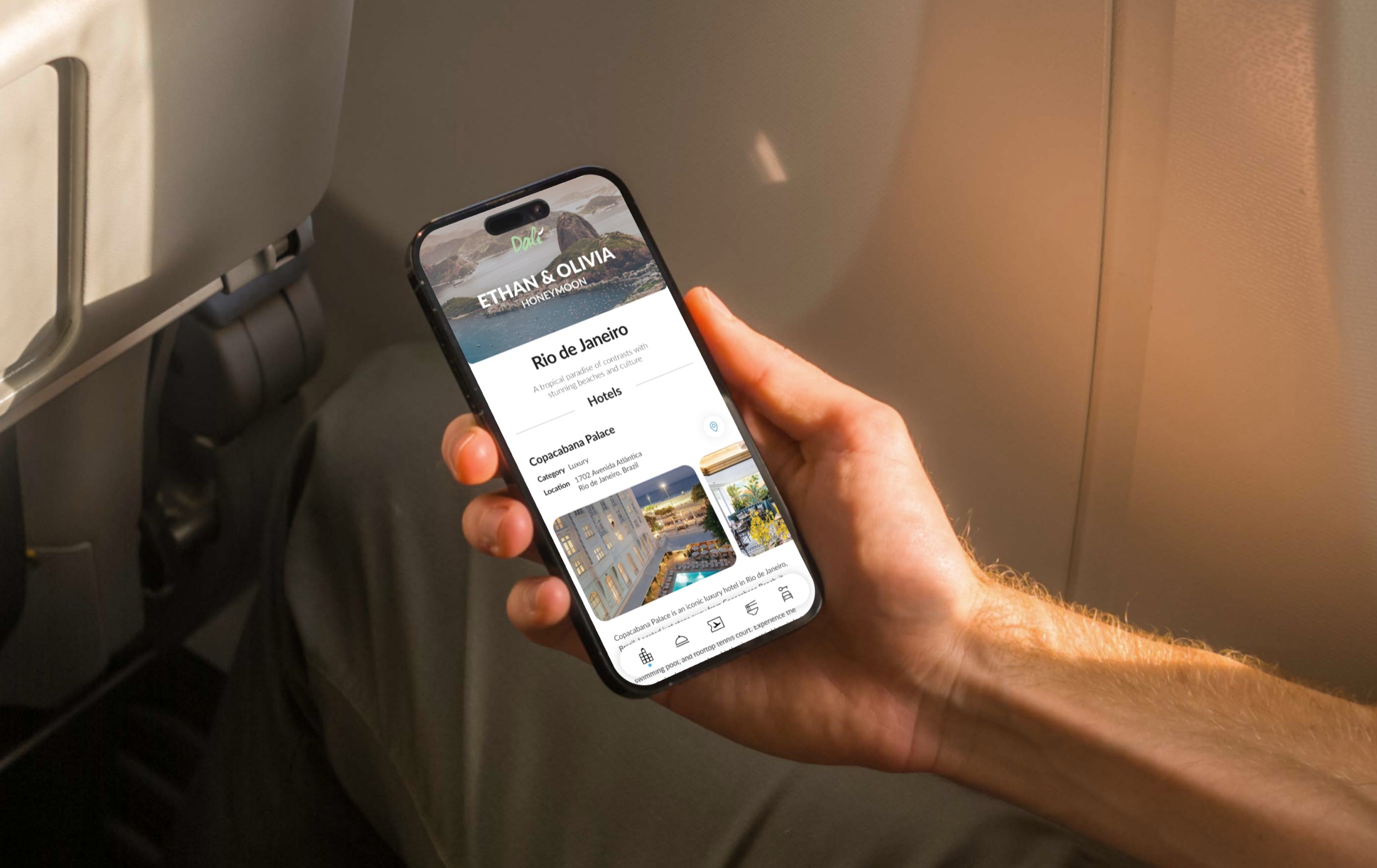
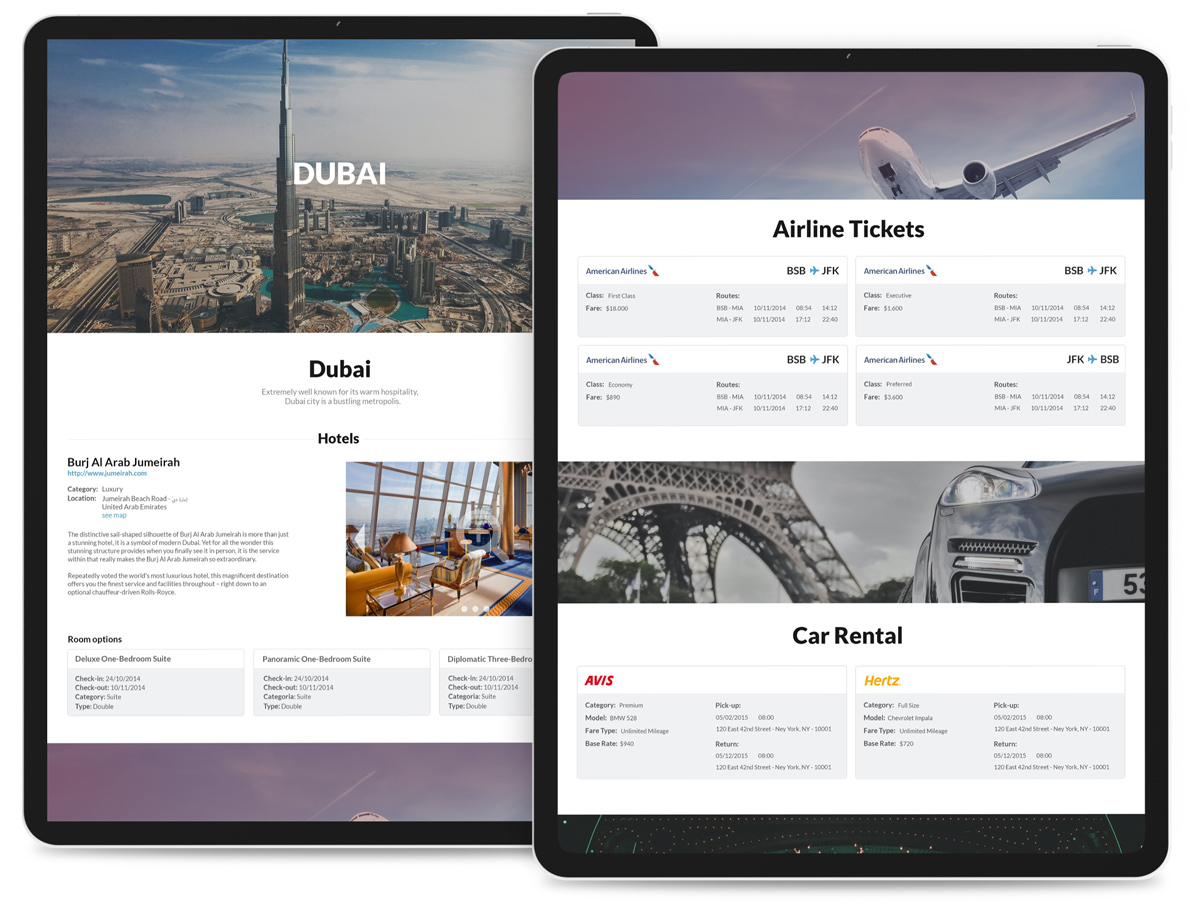
There, the user would have the ability to view the itinerary and hotel room photos, make changes autonomously, mix & match items like rooms and flight tickets, see maps and vouchers, make and manage reservations, and more, all with a friendly interface to help the decision-making process.
From the travel agency perspective, it would allow agents to auto-generate proposals pulling information from data sources. Content that used to live in scattered files became a library the system draws from: when an agent selects a city, the available hotels come in with photos and descriptions ready to drop into the proposal, and an integration with airline ticketing systems pulls in current flight options and fares. It also let agents create templates that could be replicated for different users while remaining easily customizable, and opened the opportunity for the agency to partner with restaurants, car rental companies and hotels.
For the traveler, the closed PDF gave way to a link: a responsive micro-site that works just as well on a phone or tablet as on a desktop, always shows the latest version of the trip, and can be shared with travel companions in one tap.
03The process
From understanding people to a pixel-perfect handoff.
User journeys, flows & storyboards
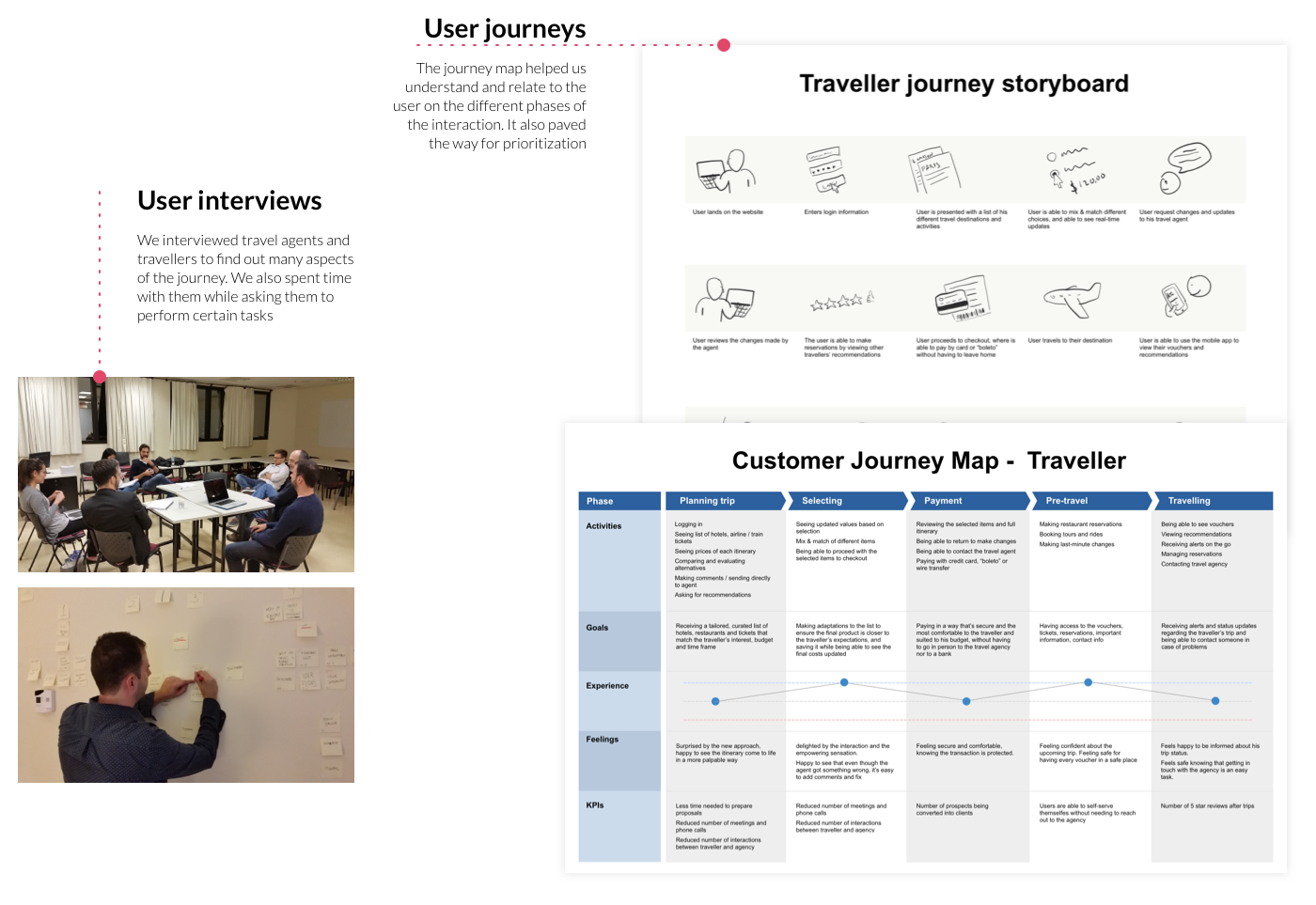
We interviewed end users and travel agents and designed journey maps for the different users to try to capture their experience during the interaction with the system.
We also created storyboards to understand and visualize the actions of users during the time they would be using the tool. These maps gave us a lot of clarity and, alongside the interviews, a starting point for prioritizing features.
Prioritization & road map
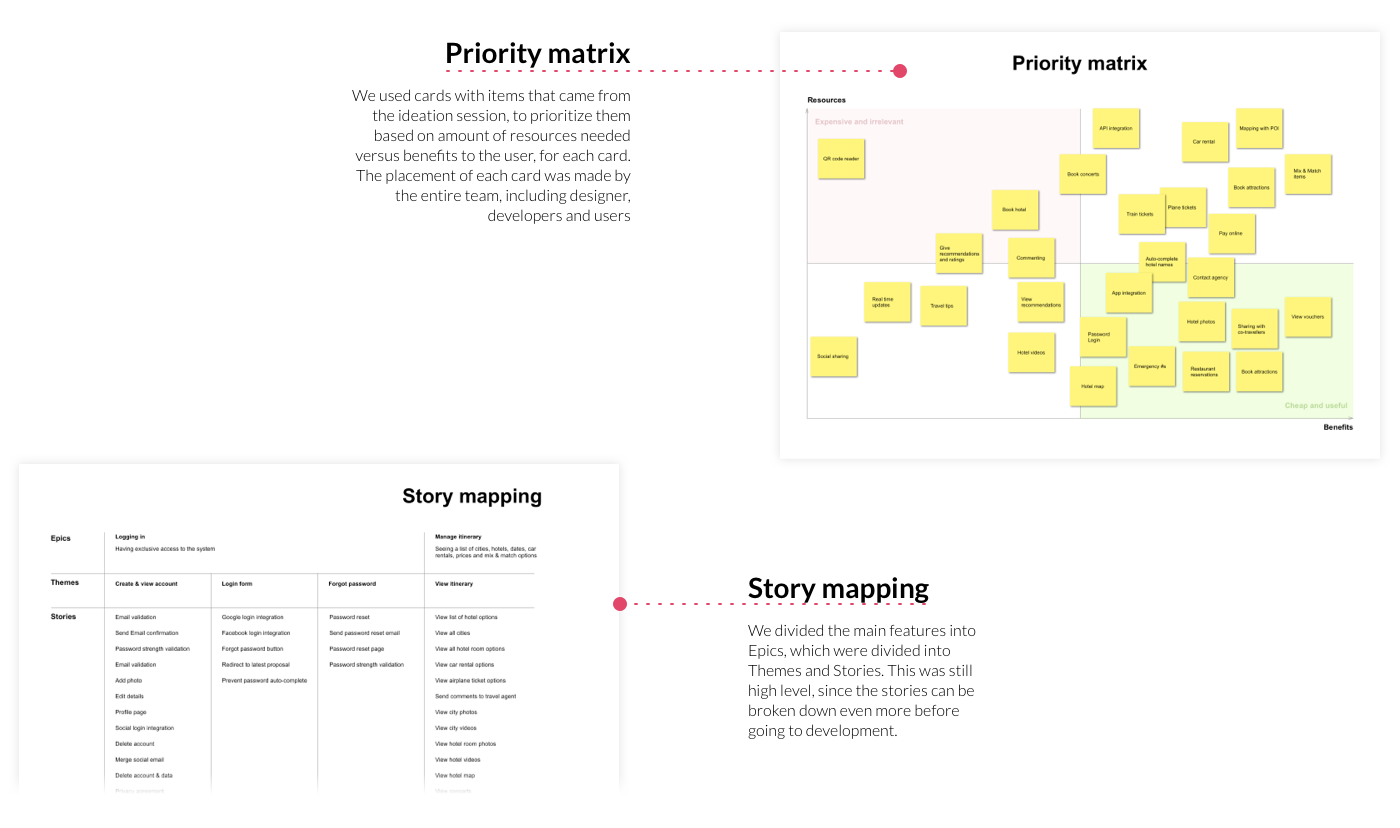
With the research synthesized, we mapped features against effort and value to decide what to build first.
The creation of the journey maps gave us clarity and, alongside the interviews, a starting point for prioritizing features and creating a product roadmap.
Wireframing
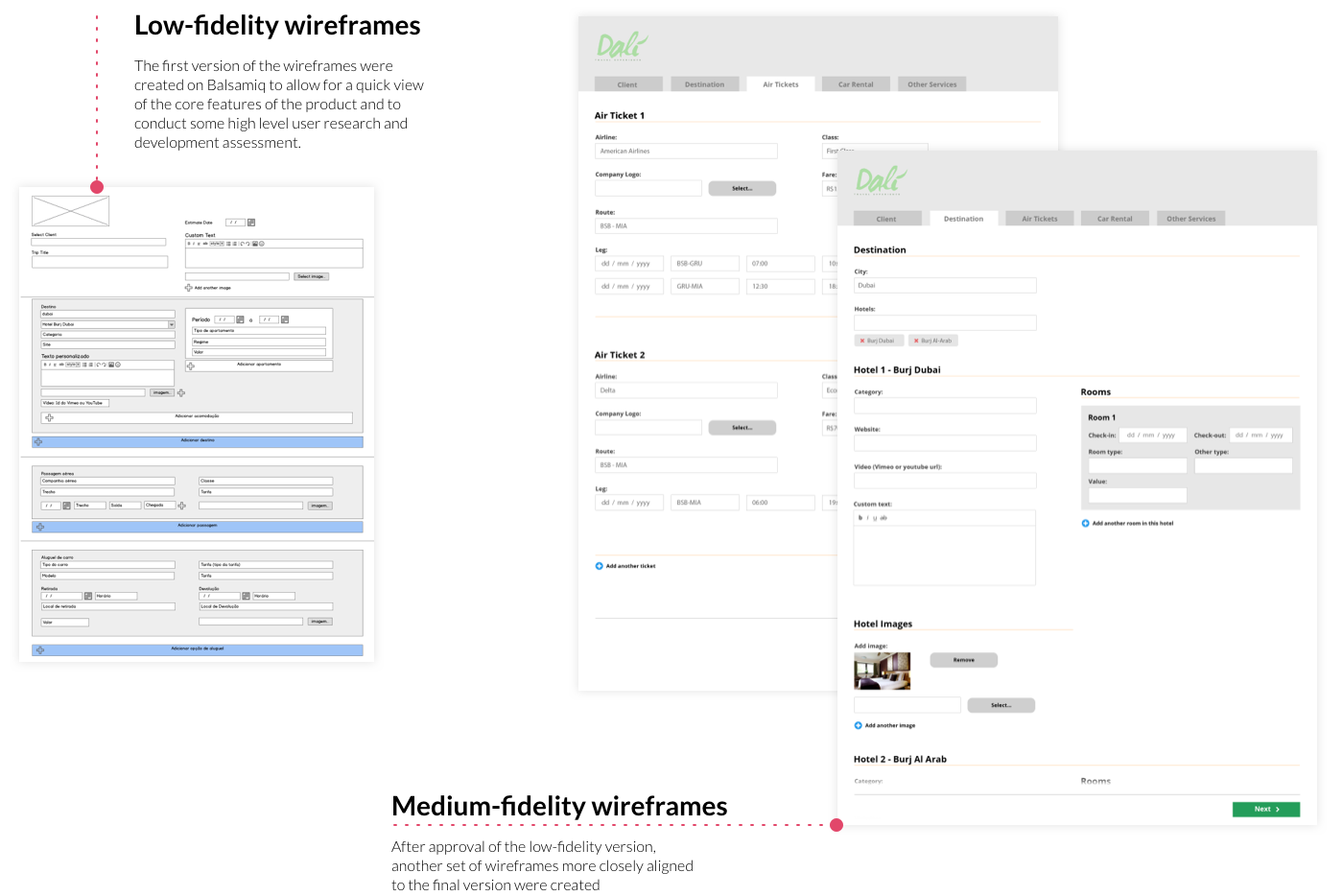
After ideating, prioritizing, and creating the list of requirements, and before jumping into high-fidelity designs, we started by creating wireframes.
During that phase, we made sure that every single requirement was captured by the mockups. They were then presented to users and developers, and adjustments were made to match what the developers were able to build and what the users expected to see.
Development handoff
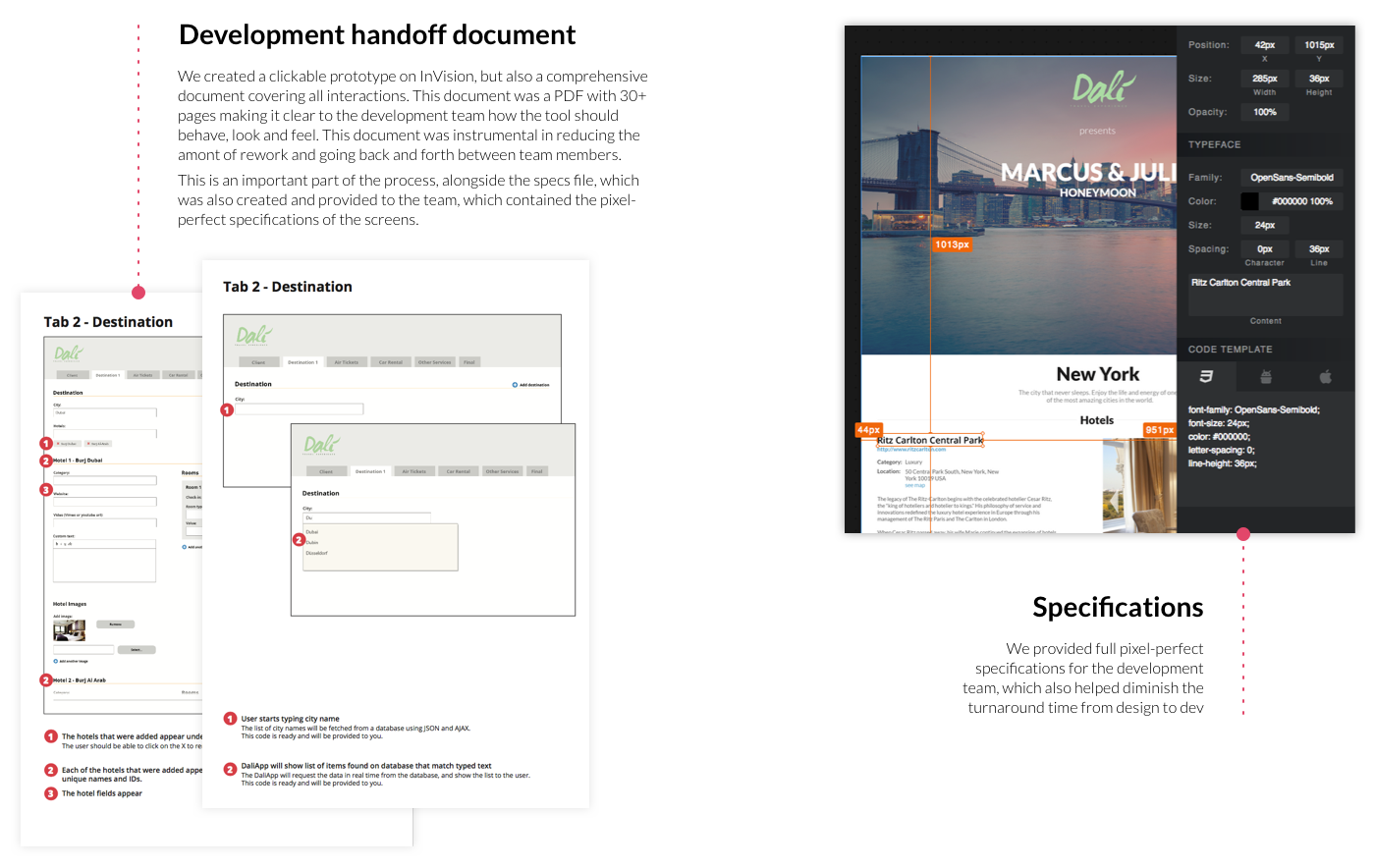
We created a clickable prototype on InVision, but also a detailed document covering all interactions, a PDF with 30+ pages making it clear to the development team how the tool should behave, look and feel. This was instrumental in reducing rework and back-and-forth between team members.
This is an important part of the process, alongside the specs file, also created and provided to the team, which contained the pixel-perfect specifications of the screens.
04Results & conclusion
A streamlined experience for travelers and agents alike.
The biggest shift was in the agents' time. A proposal that used to take around two days of manual assembly, hunting content across documents and spreadsheets, requesting fares, and laying out a PDF, can now be put together in about an hour, with cities, hotels, and live flight options pre-loaded in the system. Revisions that used to mean redoing the document and booking another meeting became same-day adjustments the client sees instantly.
Travelers got a better deal too: instead of a static PDF that aged with every change, they can open the latest version of their trip anywhere, on any device, share it with companions, and adjust it on their own.
Dali Travel's emphasis on customer satisfaction and innovative features set it apart from traditional travel-planning tools, one that caters to the modern traveler's needs and preferences.