DataLabs
Turning data into practical, customized tools for the people who need them
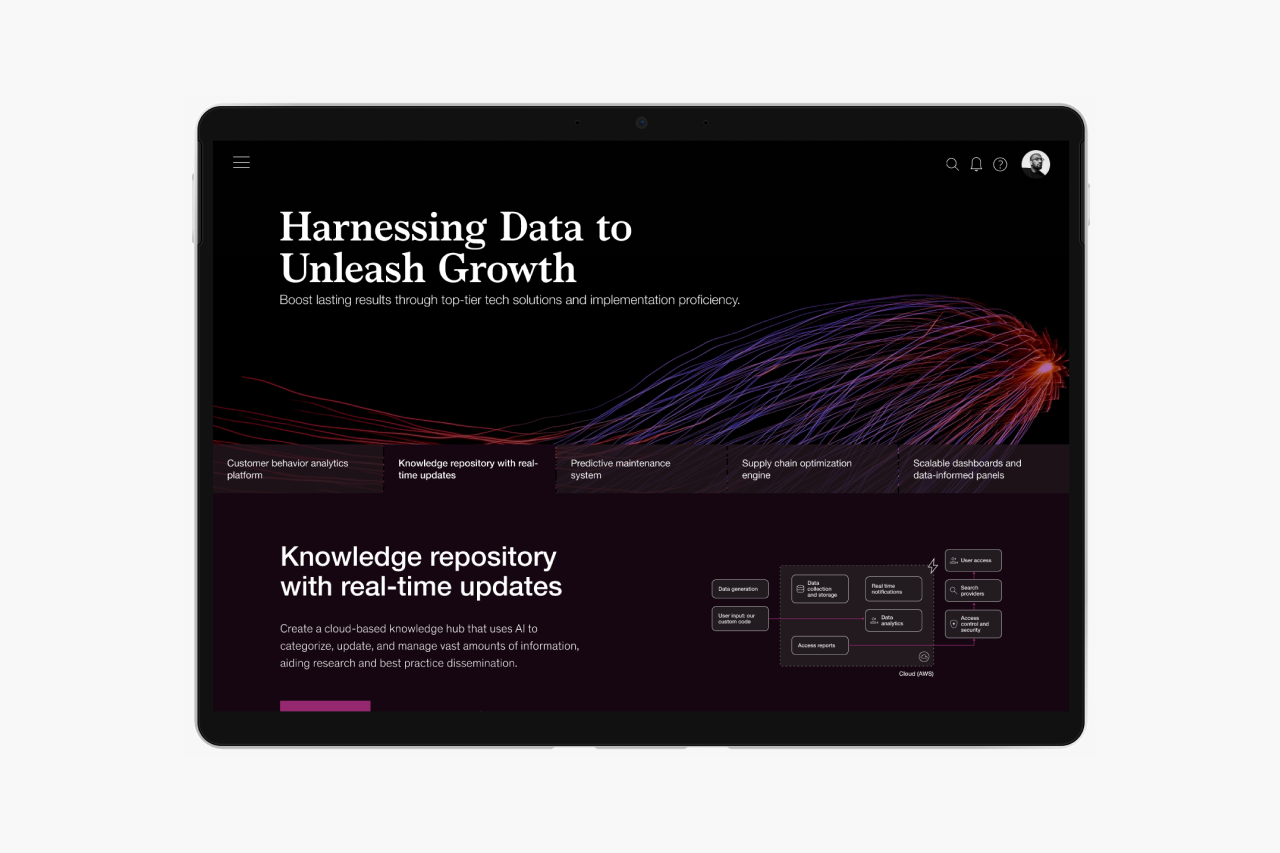
DataLabs sits between data science and business intelligence, building custom data solutions for enterprises. This case study covers the design and build of the platform, which lets users connect, customize, and use a range of data tools and services: dashboard creation, real-time knowledge repositories, predictive modeling, and custom data apps, all running on a SaaS backend.
01
Objective
The goal was a platform that was scalable, efficient, and easy to use, so both business users and data scientists could reach the tools they needed for processing and analysis. The hard part was making one system powerful enough for technical users and still approachable for people without a data background.
The platform gives users flexible environments for a wide range of data work, from collecting data to building custom apps. Those apps can be simple no-code setups or fully bespoke builds for specific needs.
Instead of just handing over tools, the platform helps users pick the right ones for their use case and goals across analysis, insights, and BI. It offers templates, pre-configured tools and environments, and a curated set of solutions matched to what each enterprise is trying to do.
The hard part was making one system powerful enough for technical users, and still approachable for people without a data background.
02
Research
To understand user needs and pain points, we ran interviews and surveys with data scientists, business analysts, and IT managers. A few clear demands came out of it:
We found plenty offered strong tools, but few had the flexibility and design to work across many industries and skill levels.
03
Implementation
The platform was built to support a wide range of modules, such as:
We built it as a cloud-based SaaS model, which keeps it scalable and easy to update. Users select, configure, and deploy their chosen solutions from a central management console.
Because the data is sensitive, strong security and compliance with global data-protection rules came first.
04
Testing
We ran usability testing throughout, so both technical and non-technical users could get around the platform. That included A/B testing of UI elements and regular feedback loops.
To keep the platform reliable and fast, we ran heavy performance testing, especially on the real-time processing and predictive-analytics features.
05
Conclusion
The work centered on what users actually needed, and on building something functional, usable, and scalable. Through research, careful design, and detailed implementation, DataLabs put powerful tools in an accessible, customizable format. It is a good example of what tailored data solutions can do, and of why a user-centered approach matters when you are building complex platforms.